Bioidentical Hormone Therapy, Explained by the Clinic That Prescribes It
What bioidentical hormones are, how they differ from older synthetic preparations, who they help, and why Ageless Living tests widely and re-tests at eight to twelve weeks before adjusting anything.
By Ageless Living PhysiciansInternal medicine, hormone and metabolic care

Hormones sit underneath energy, sleep, mood, body composition, libido and recovery. When they shift, everything above them shifts, often years before a standard panel flags a problem. Bioidentical hormone therapy exists for the person who has been told their results are normal while feeling anything but.
What bioidentical means
A bioidentical hormone has the same molecular structure as the hormone your body produces: estradiol, progesterone, testosterone. Older therapies used related compounds that the body recognised imperfectly. Bioidentical preparations are regulated pharmaceuticals, made in standardised doses and delivered as gels, patches, capsules or, where appropriate, compounded formulations prepared by a pharmacist.
Ageless Living was founded by a pharmacist and an internal medicine physician, which is why the prescribing here is careful about form, dose and how the two interact with the rest of your medication.
Who it helps
- Perimenopause and menopause: hot flushes, night sweats, broken sleep, mood volatility, joint pain, brain fog and changing body composition.
- Andropause and low testosterone in men: declining energy, motivation, muscle mass and libido, confirmed on repeat testing.
- Thyroid dysfunction, including patients whose TSH sits inside the reference range while symptoms persist.
- Disrupted cortisol rhythm: wired-but-tired evenings, early waking and poor stress tolerance.
How the program runs
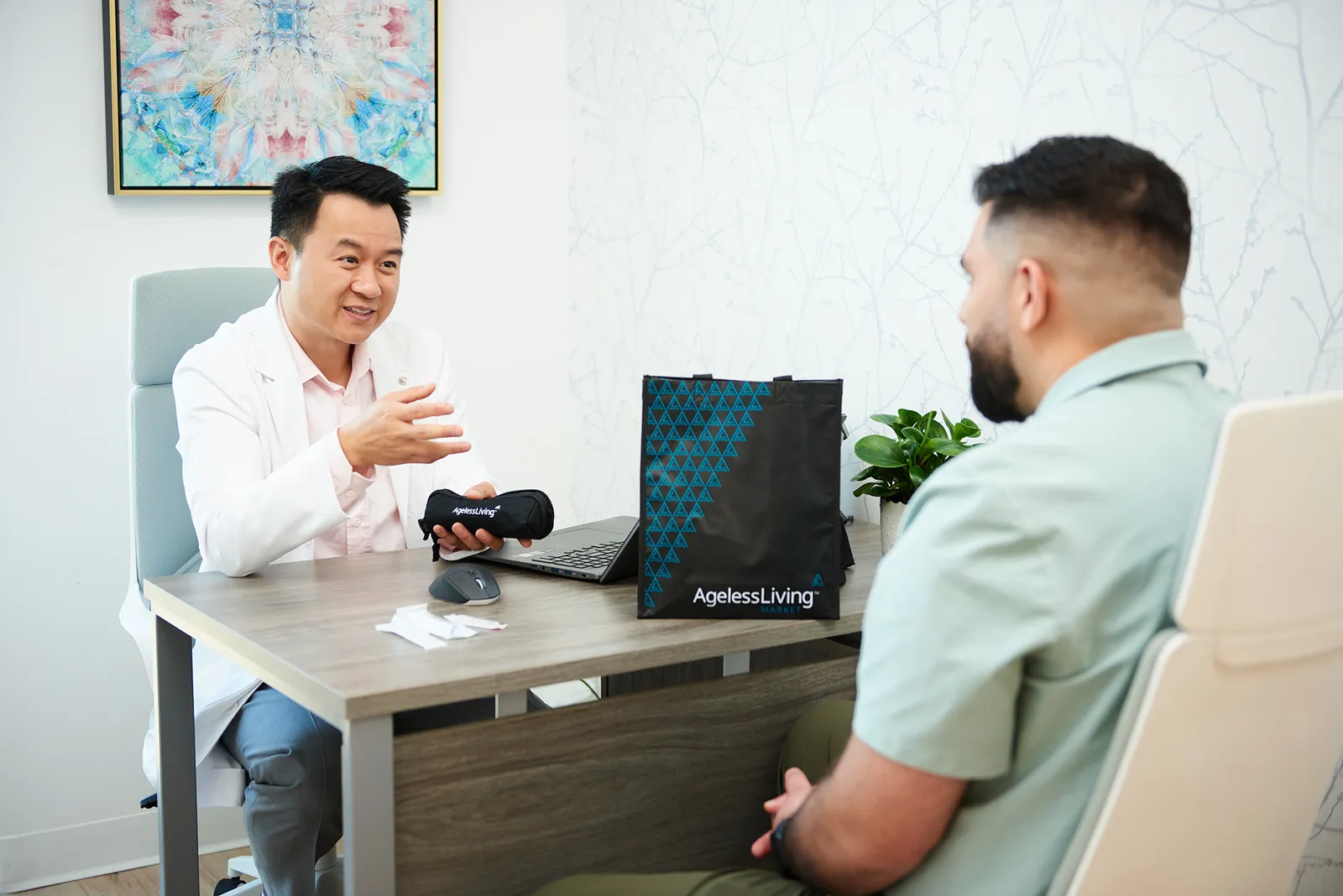
- Physician consult: a full hour on your history, symptoms and goals, ending with a diagnostic plan. Serum, saliva or urine testing follows as needed.
- Testing: an extended hormone panel with thyroid, sex hormones and adrenal markers, plus metabolic, inflammatory and micronutrient testing. Timed correctly to your cycle where relevant.
- Review: sixty minutes with your physician reading every result in plain language, and a nutritionist consultation to build the plan around food and lifestyle too.
- Treatment: bioidentical hormone therapy where clinically indicated, alongside non-hormonal options where they fit.
- Re-test at eight to twelve weeks and a full follow-up at three months, with dosing adjusted on evidence.
What patients typically notice
Sleep is usually first, within the first month: fewer night sweats, less 3am waking, then steadier energy and mood through the day. By the first re-test, levels are measured against your own baseline and dosing is refined. Over six months, body composition, libido and recovery changes settle, and you move to a stable maintenance dose reviewed at least twice a year.
Supporting nutrients matter too. Magnesium, omega-3 and a well-formulated estrogen-metabolism support are often part of the plan, chosen from your bloodwork rather than a shelf.
Questions we hear
- Is bioidentical hormone therapy safe?
- Prescribed from bloodwork, dosed to physiological range and monitored with repeat testing, modern hormone therapy has a well-characterised safety profile for most patients. Risks and contraindications are reviewed individually with your physician before anything is prescribed.
- What tests are done before hormone therapy?
- An extended hormone panel including thyroid, sex hormones and adrenal markers, along with metabolic, inflammatory and micronutrient testing. Results are reviewed in a sixty-minute physician appointment.
- Is hormone therapy covered by MSP?
- Consultations and testing at Ageless Living are private. Some laboratory tests and prescriptions may be covered by MSP or extended benefits; the clinic will tell you what is and is not before you proceed.
- How soon will I feel a difference?
- Most patients notice sleep and energy changes within the first four weeks. Dosing is refined at the eight-to-twelve-week re-test, and the fuller picture settles over about six months.
Information in this article is educational and not a substitute for medical advice. Individual response varies; what is right for you is confirmed in consultation.