Peptides and Growth Factors: What They Do That Retinol Does Not
P-TIOX, Grenzcine, TriHex and hyaluronic acid boosters are the products patients ask about most and understand least. What signalling peptides and growth factors actually do, and where they belong in a routine.
By Ageless Living Aesthetics TeamMedical aestheticians and nurse injectors
Skin is constantly being rebuilt, and the rebuilding is directed by messages: small proteins that tell a fibroblast to make collagen, or a muscle to contract less, or a wound to close. Peptides and growth factors are those messages, or close imitations of them, formulated to be applied from the outside. Understanding that makes the category far less mysterious.
Three kinds of peptide
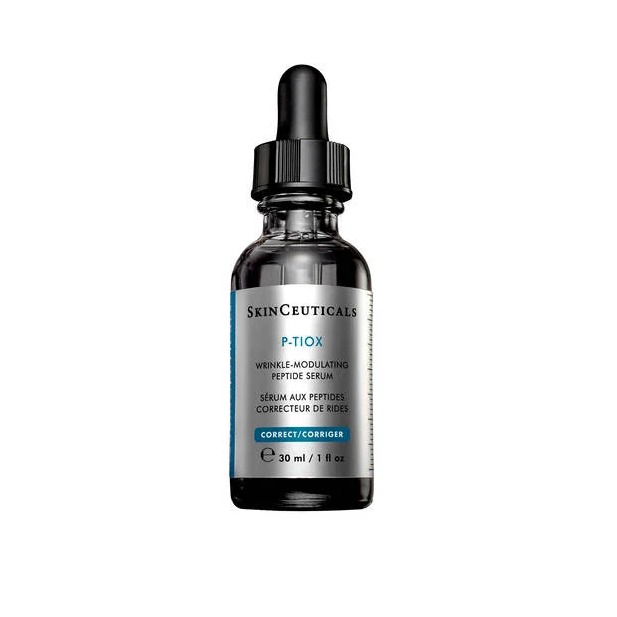
- Signalling peptides, such as palmitoyl pentapeptides and the amplified complex in P-TIOX: they mimic fragments of broken-down collagen, which the skin reads as a signal to make more. Firmness and lines.
- Neuropeptides, such as the ones in Vivier Ultimage and P-TIOX: they interfere with the muscle-contraction signal at the skin surface, softening expression lines. Needle-free, and the natural partner to neuromodulators between appointments.
- Carrier peptides, such as copper tripeptides: they deliver minerals the skin needs for repair and enzyme function. Healing, and around procedures.
Growth factors
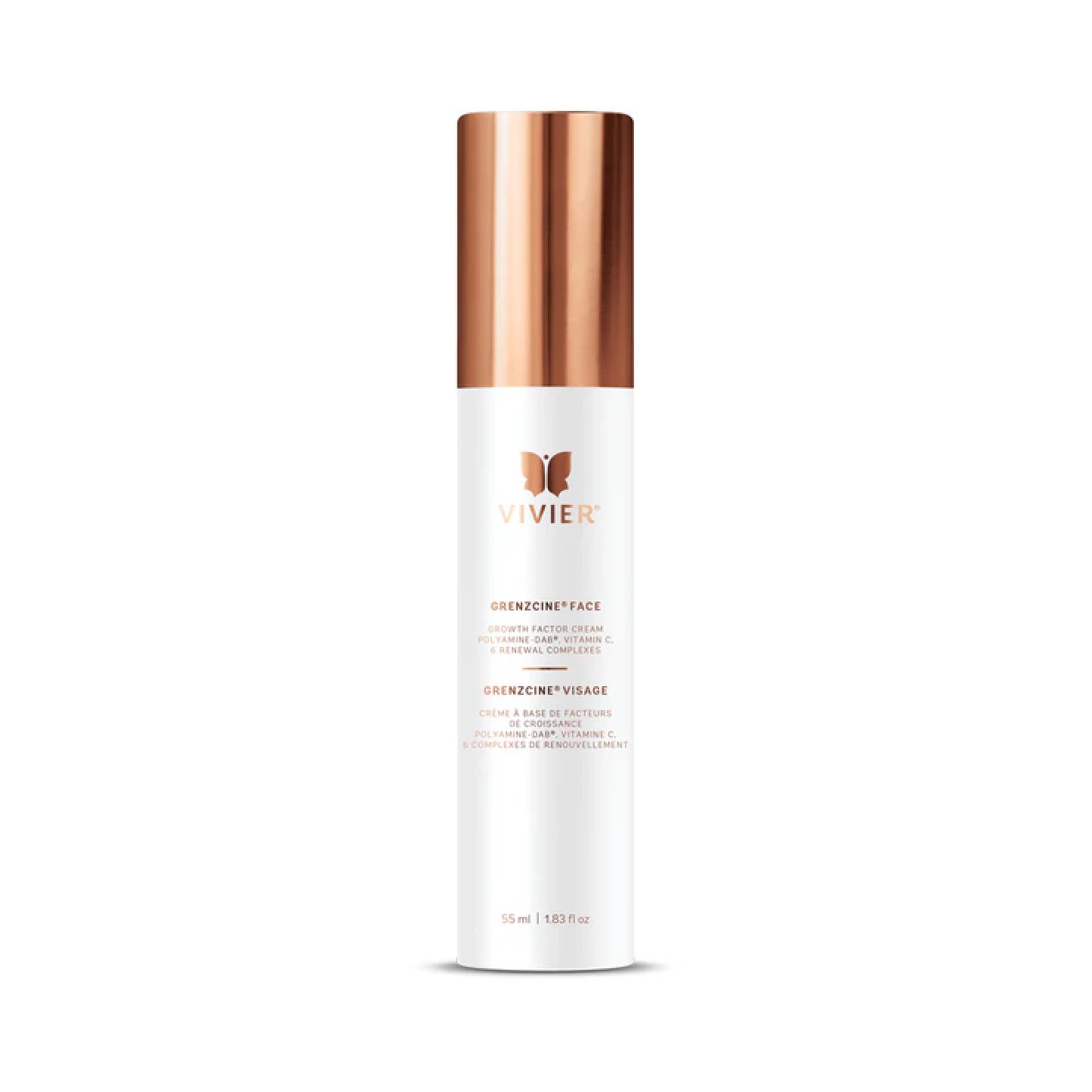
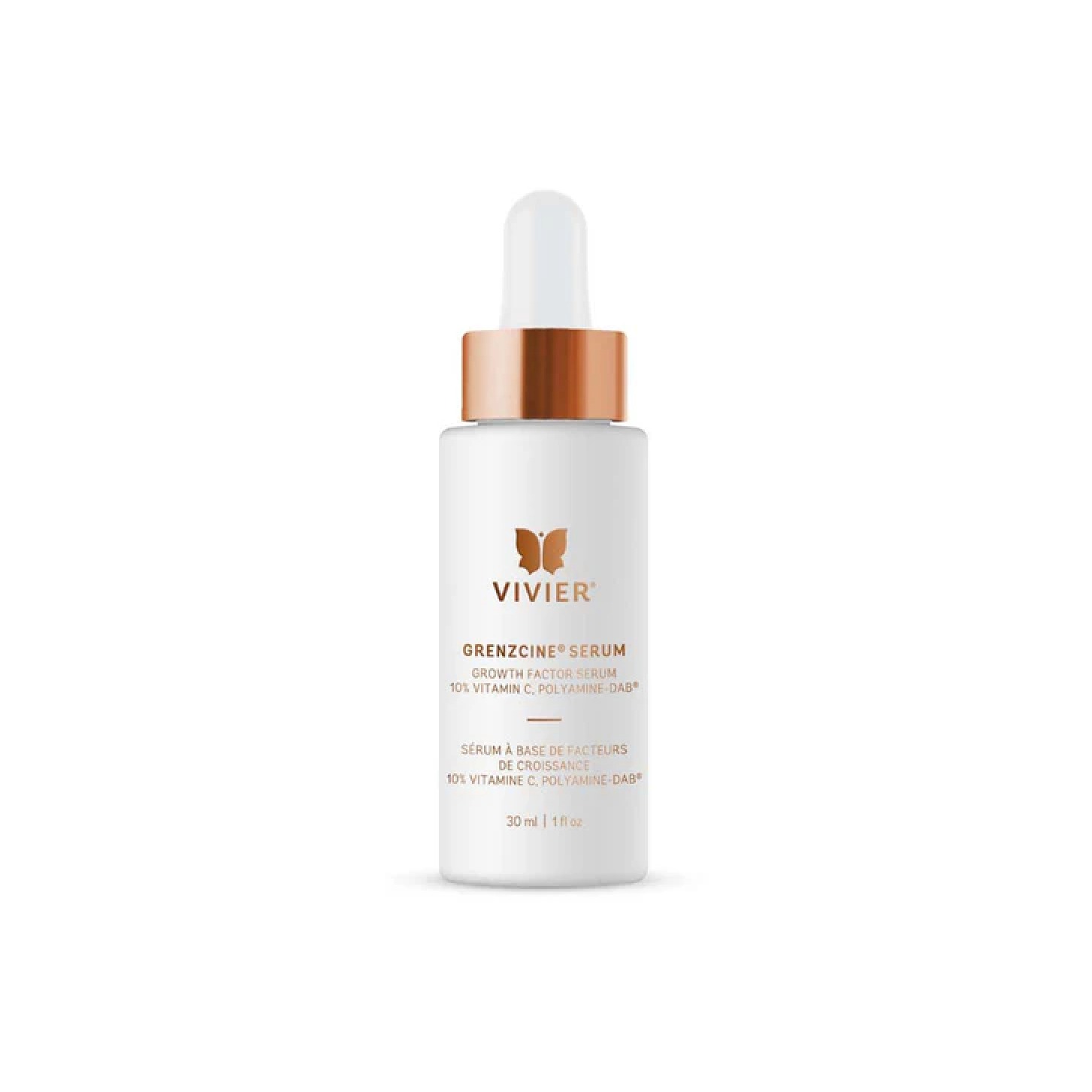
Growth factors are larger signalling proteins involved in wound healing. In skincare they are used to support thin, fragile, advanced-ageing skin and to accelerate recovery around procedures. Vivier's Grenzcine range pairs polyamine growth factors with vitamin C and renewal complexes for the face, neck and eye, and it is the line we reach for when a patient's skin has become noticeably thinner through midlife.
TriHex and the post-procedure logic
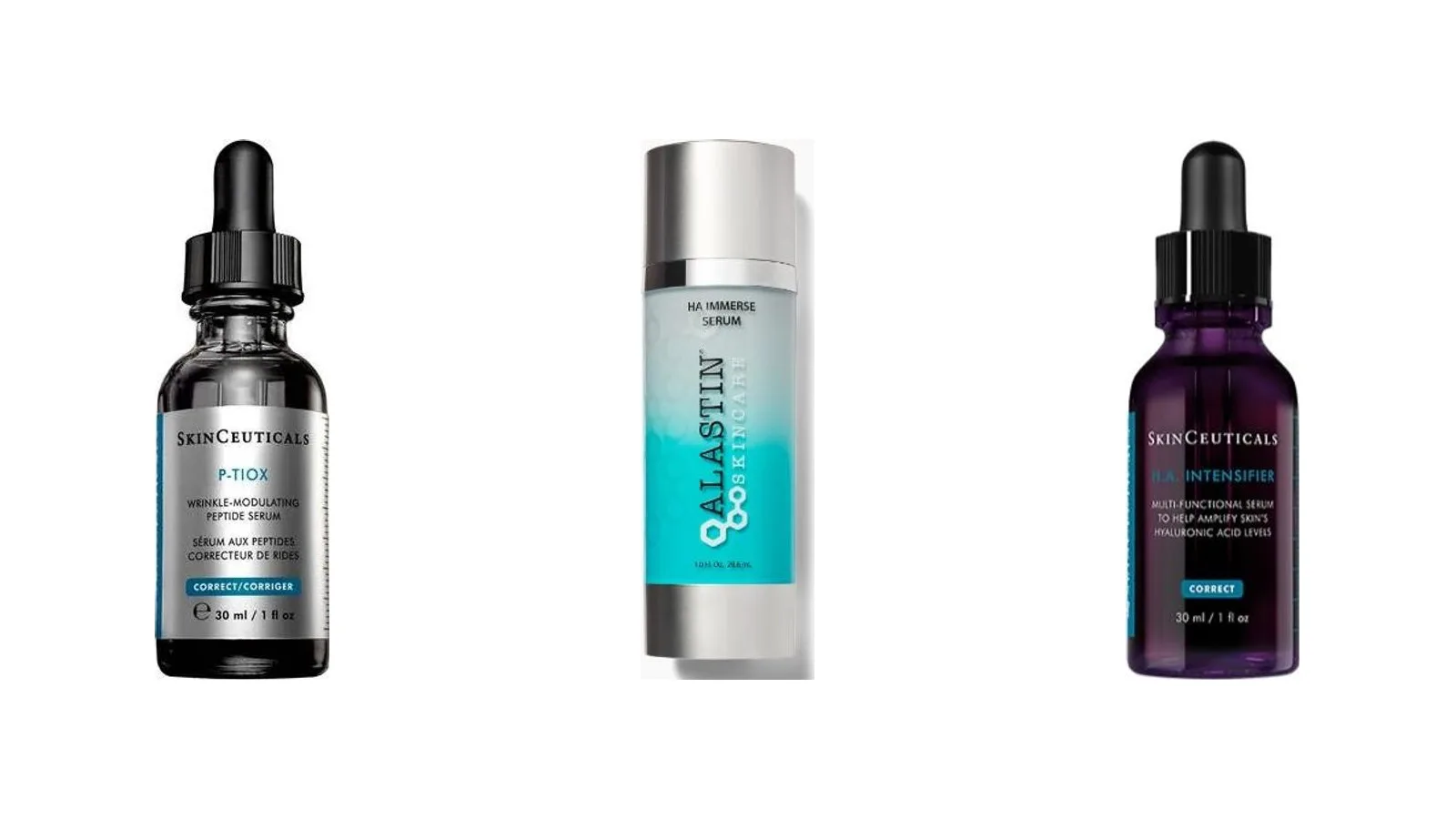
Alastin's TriHex technology combines peptides designed to help the skin clear damaged elastin and collagen and support the production of new. It is why the brand's moisturisers and body treatment are used before and after laser, microneedling and body-contouring procedures: the skin is primed to rebuild well.
Hyaluronic acid boosters
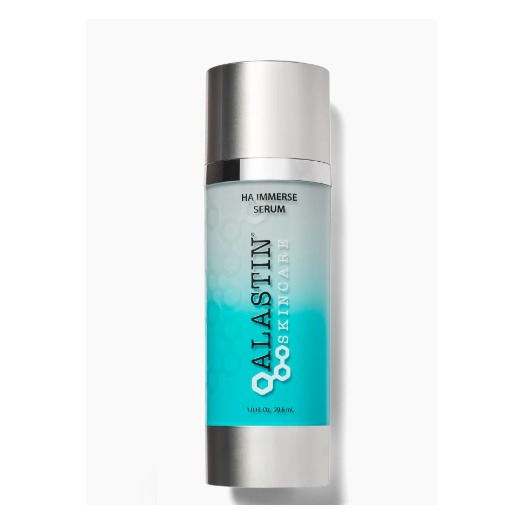
A humectant serum sits on the surface and holds water. A booster such as H.A. Intensifier or HA Immerse goes further, stimulating the skin's own hyaluronic acid and the glycans that hold structure, so plumpness builds over weeks rather than washing off. They are excellent alongside filler, extending the volume result.
Where they go in the routine
Peptide and growth factor serums layer after vitamin C in the morning and after retinol at night, before moisturiser. They do not conflict with retinol or acids, which makes them the easiest actives to add. Expect firmness and line improvement over eight to twelve weeks, and think of them as the products that direct what retinol and treatments have set in motion.
Questions we hear
- Do peptides work as well as retinol?
- They do different jobs. Retinol increases turnover and has the most evidence for lines; peptides signal collagen and soften expression lines without irritation. Together they do more than either alone.
- What is P-TIOX?
- A needle-free anti-wrinkle peptide serum from SkinCeuticals with an amplified peptide complex and neuropeptides, formulated to reduce the look of expression lines and to extend the smoothness of neuromodulator treatments.
- Can I use peptides with retinol and vitamin C?
- Yes. Peptides layer with both and are the easiest active to add to an existing routine.
Information in this article is educational and not a substitute for medical advice. Individual response varies; what is right for you is confirmed in consultation.